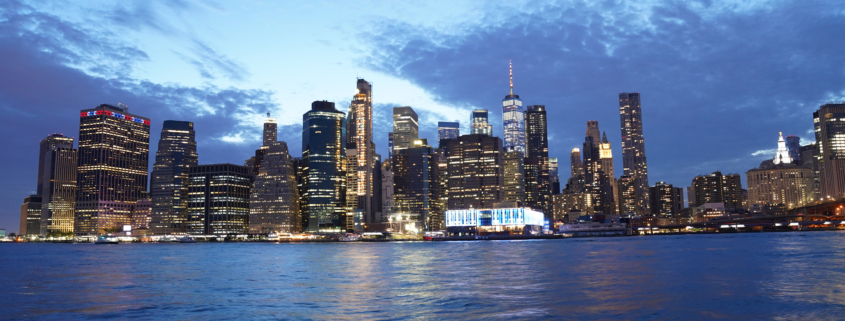
You may know the story already: A leading retailer of its day draws up plans for what would become the world’s tallest building to serve as its corporate headquarters in a major American city. Their iconic structure does in fact become that superlative and goes on to reshape the urban skyline for years to come.
Perhaps you’re thinking of the Sears Tower (now known as the Willis Tower) in Chicago, which opened in 1973. Soaring 110 stories and 1,451 feet over the Windy City, the Sears Tower held the title as the world’s tallest building for a quarter century.
You’d be right, of course.
But the real and original skyscraper goes back another 60 years to before World War I. That’s when Frank W. Woolworth, founder of the ubiquitous five-and-dime stores bearing his name, commissioned in New York City what could become The Woolworth Building, which opened in 1913. Once completed, his building towered a then-staggering 792 feet, making it the tallest building in the city, and the rest of the planet for that matter.
And while the structure at 233 Broadway was a masterpiece in neo-Gothic design (earning it the nickname “The Cathedral of Commerce”), its true innovation lay inside its elevator system that included nearly two miles of shafts. This pioneering work with elevators would guide the development and construction of skyscrapers worldwide to this very day.
When we think skyscrapers, we imagine steel frames, soaring facades, endless sheets of glass, and perfectly silhouetted skylines. But the true enabler behind cities increasingly moving vertically has always been hidden in plain sight: the elevator. Indeed, as much as engineering breakthroughs around metals and materials, it’s been the clear, methodical advances in elevator technology that quietly dictated how high buildings could rise.
The Woolworth Building: The World’s Tallest Made Practical by Elevators
When the Woolworth Building opened in 1913, the everyday limit for tall buildings wasn’t only structural strength of steel and iron girders. It was safe, reliable and efficient vertical transportation for people inside these increasingly tall spaces. If tenants or visitors had to wait too long for elevators, the building’s upper floors would be commercially useless. Frank W. Woolworth and his engineers understood that speed alone wasn’t enough. Efficiency mattered just as much.
Enter “Zoning”: A Breakthrough in Elevator Design
The Woolworth Building was among the earliest skyscrapers to fully embrace elevator zoning, a concept that remains foundational in skyscraper design to this day. Instead of every elevator serving every floor, the building was divided into vertical zones, each being served by a dedicated group of elevators. In practice, it worked like this:
- Local elevators served lower floors with frequent stops.
- Express elevators bypassed lower levels and delivered passengers directly to the upper stories.
While this may seem somewhat obvious today, it was certainly a breakthrough then and dramatically reduced travel times and congestion. Riders heading to higher floors no longer waited behind dozens of short trips. In effect, the Woolworth Building functioned like a vertical subway system with express trains making fewer stops and focused on getting to further away destinations quickly.
Otis Elevators Were at the Core
The Woolworth Building installed Otis electric traction elevators, which were still relatively new technology in the early 1900s. Compared to hydraulic elevator systems, electric traction elevators could move faster, further and more smoothly, all of which are important advantages when servicing a building north of 790 feet.
In effect, the Woolworth Building provided that crucial proof that an express elevator system would function safely and efficiently, a vital consideration in skyscraper design. But it was only the beginning.
The Need for Speed: Elevators in the Empire State Building Era
By the time the Empire State Building was completed in 1931, the skyscraper race towards the heavens had intensified. At 1,250 feet tall, it dwarfed its predecessors, and in turn demanded a new level of elevator performance.
The Empire State Building’s elevators could travel at 1,200 feet per minute (that’s about 14mph), a then-staggering speed for the era. Achieving this speed required improvements across multiple fronts:
- More powerful traction motors
- Improved braking and control systems
- Stronger hoist ropes and guide rails
- Refined counterweight balancing
But high lift-speed alone wasn’t the only challenge or consideration. Passenger comfort mattered just as much (ask anyone who’s been on an especially bumpy or noisy elevator). Rapid acceleration and deceleration could lead to discomfort, ear pressure changes, and safety implications. With speed came new challenges. In fact, elevator engineers had to carefully tune their lift motion to balance performance and passenger experience.
Efficiency at Scale
The Empire State Building incorporated multiple elevator banks, each one serving a defined vertical zone above. Some elevators ran express to sky lobbies, where passengers transferred to local elevators serving upper floors. This, in fact, was a strategy that foretold modern super-tall design (it was actually a key design element of the World Trade Center twin, 110-story towers in New York prior to 2001).
Even today, the Empire State Building’s elevator logic is still recognizable to elevator mechanics and industry professionals. The technology has evolved, but the underlying principles remain remarkably consistent.
What Accounts for Elevator Speed?
The Burj Khalifa in Dubai at 2,717 feet. The 2,222-foot Merdeka 118 in Kuala Lumpur. China’s Shanghai Tower at 2,073 feet. Modern skyscrapers push heights once thought impossible. But to enable that extraordinary vertical achievement, elevator speeds have climbed accordingly. Some of the world’s fastest elevators (such as those in the Shanghai Tower) now exceed 4,000 feet per minute. This leap wasn’t the result of a single invention, but a convergence of multiple technological advances.
A few of the factors drove those speed records:
-
Advanced Motor and Drive Systems.
The transition from early electric motors to high-efficiency permanent magnet synchronous motors dramatically improved power and control.
-
Improved Materials and Ropes.
Traditional steel wire ropes are heavy, especially at extreme heights. Modern systems increasingly rely on materials that are lighter, stronger, and more durable. Reduced cable weight enables higher speeds and longer travel distances without compromising safety.
-
Sophisticated Control Algorithms.
Much like the world around us more generally, modern elevators rely on software as much as hardware to function as they do. Computer-assisted dispatching systems can analyze traffic patterns in real time, grouping passengers and predicting demand.
-
Ride Comfort and Aerodynamics.
At very high speeds, air pressure inside the vertical shaft, or the hoistway, itself becomes a factor. As such, engineers must now account for aerodynamic drag, pressure equalization, and vibration control in ways that were never needed in Frank W. Woolworth’s day. Advanced guide shoes, roller guides, and active damping systems which can help reduce or suppress vibration ensure a smooth ride—even at extreme velocities.
Elevator Look Back: What’s Changed and What Hasn’t
The world’s tallest buildings, from the Burj Khalifa to the Shanghai Tower, rely on principles first demonstrated over a century ago on 233 Broadway in New York. But they apply them at an entirely different scale.
What Has Stayed the Same with the Modern Elevator
- Zoning remains essential. No modern supertall building relies on a single elevator bank to quickly and efficiently shuttle riders throughout a building.
- Express and local systems still dominate vertical planning.
- Elevator cores continue to shape building design, influencing floor plates, structural layouts, and leasable space.
In other words, while the building height has clearly changed, today’s systems are refinements of concepts proven in the Woolworth and Empire State buildings.
What’s Different Now with the Modern Elevator
- Sky lobbies are far more sophisticated, often stacked at multiple levels throughout supertall buildings.
- Double-deck elevators move two cabs at once, increasing capacity without expanding shaft space.
- Destination dispatch systems eliminate traditional call buttons, directing passengers to assigned elevators before they board.
- Ultra-high-speed elevators require pressurized cabins and specialized safety systems.
What’s Next for Elevator Technology?
Since 1913, the race to the sky has never been just about just height. It’s also been about movement, and how quickly, safely, and comfortably people can travel through vertical space. From the Woolworth Building’s pioneering elevator zoning strategy to today’s computer-driven and comfort-based accommodations, elevator progress has been practical and deeply rooted in solving the real-world passenger constraints inside these metal boxes.
In short, this is not just a history lesson. For elevator manufacturers and service professionals, this century-plus context is an ongoing reminder that innovation often comes from solving practical operational challenges. And as cities grow denser and buildings rise higher, elevators will remain the indispensable technology that’s often literally at the center of it all.
